Hydro-Jetting Services in Suffolk County, NY - Clear Any Blockage, Any Pipe
The drain keeps backing up. You've had it snaked before. It's still slow. Hydro-jetting flushes the full pipe clean — not just a path through the clog.
SuffolkDrainAndSewer.com connects you with pros who provide professional hydro-jetting for residential and commercial properties across all of Suffolk County. They use high-pressure water to clear grease, sludge, root material, and years of buildup that a snake can't reach.
What Is Hydro-Jetting?
Most drain problems get handled with a mechanical drain snake — a cable that drills through a clog and creates an opening. For a simple blockage, that works fine. But a snake doesn't clean the pipe. It punches a hole through the problem and moves on. The buildup on the pipe walls stays right where it is, and the clog comes back.
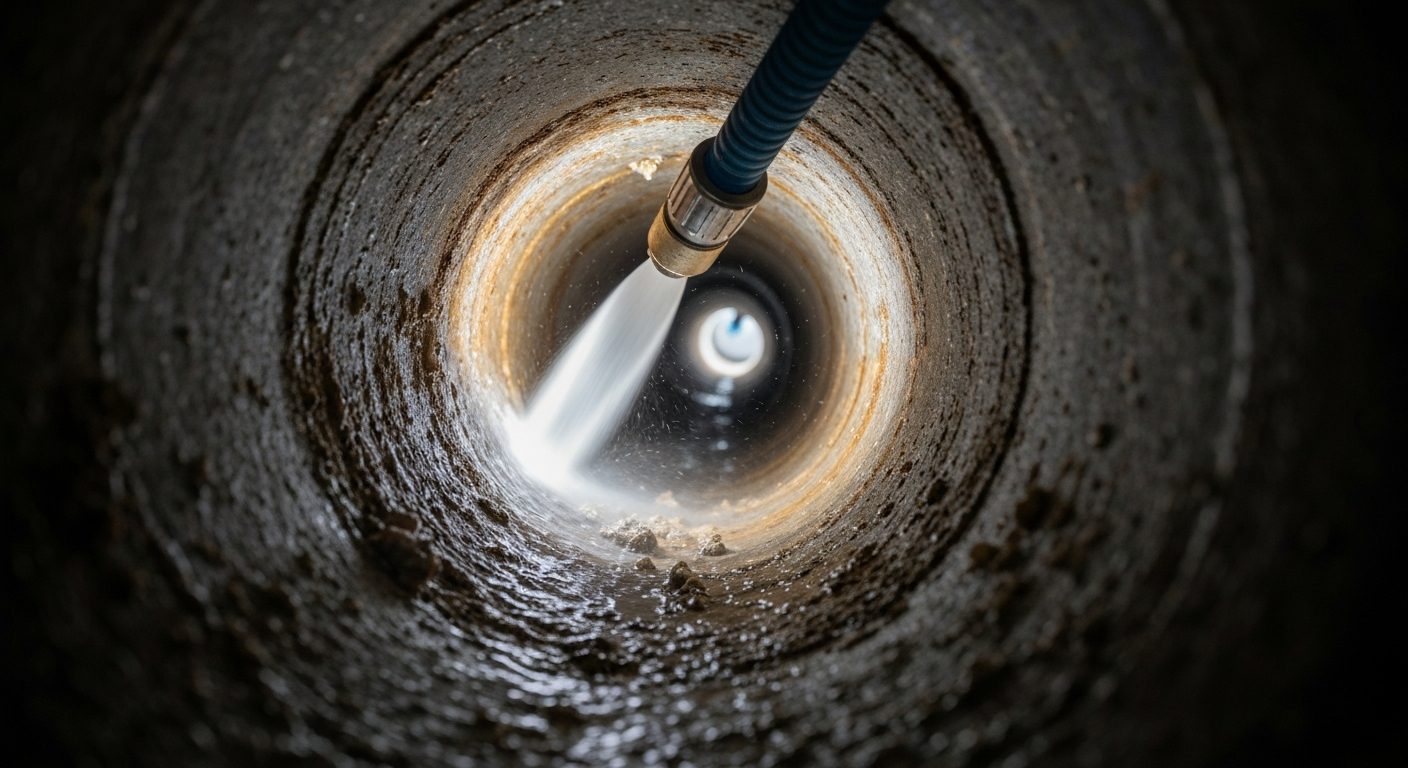
Hydro-jetting is different. It uses a specialized hose with a high-pressure nozzle to blast water through the full length of the drain or sewer line, and the numbers change depending on what's being cleared. Residential drain lines typically run 1,500 to 2,500 PSI at 4 to 8 GPM, enough to clear grease and soap scum without stressing smaller interior lines. Main sewer lines typically run 2,500 to 3,500 PSI at 8 to 12 GPM, since the higher flow moves debris efficiently through larger pipe. Commercial and municipal lines can run 3,500 to 4,000+ PSI at 12 to 18 GPM.
Pressure and flow do two different jobs. Pressure breaks the bond between buildup and the pipe wall. Flow carries that debris out of the pipe. Pressure without flow can knock buildup loose and leave it sitting in the line. Flow without pressure never breaks the bond in the first place. That's why jetting isn't just "turn up the pressure," and it's why the pros in our network match the equipment to the pipe rather than using one setting for every job.
The water doesn't just break through the clog. It scrubs the pipe walls, flushes out accumulated grease and sludge, cuts through root material, and restores the pipe to something close to its original flow capacity.
For kitchen drains in restaurants and homes, hydro-jetting is often the only real fix for grease buildup. For older pipes with years of scale accumulation, it's the difference between clearing the line and actually cleaning it. For sewer lines with root intrusion, it removes the roots rather than just compressing them.
One thing worth knowing: pros check pipe condition before recommending hydro-jetting. Very old or already-compromised pipes may need a camera inspection first to make sure the pressure won't cause additional damage. They'll tell you upfront if that's the case.
Signs a Drain Snake Isn't Going to Cut It
If any of these describe your situation, hydro-jetting is likely the right call — not another snaking.
Recurring drain problems usually have a cause. Hydro-jetting removes the buildup — but a sewer camera inspection beforehand tells pros exactly what they're dealing with and confirms the pipe can handle the pressure safely.
Drain keeps coming back? Let's find out why — and fix it for good.
Get Your Free EstimateHow Hydro-Jetting Works — Our Process
Step 1 — Camera First, When Needed
Before pros run high-pressure water through any line, they assess the situation. For pipes with known damage, age, or materials that may be fragile, they run a sewer camera inspection first. This protects the pipe and makes sure they're treating the actual problem.
Step 2 — Setting Up the Equipment
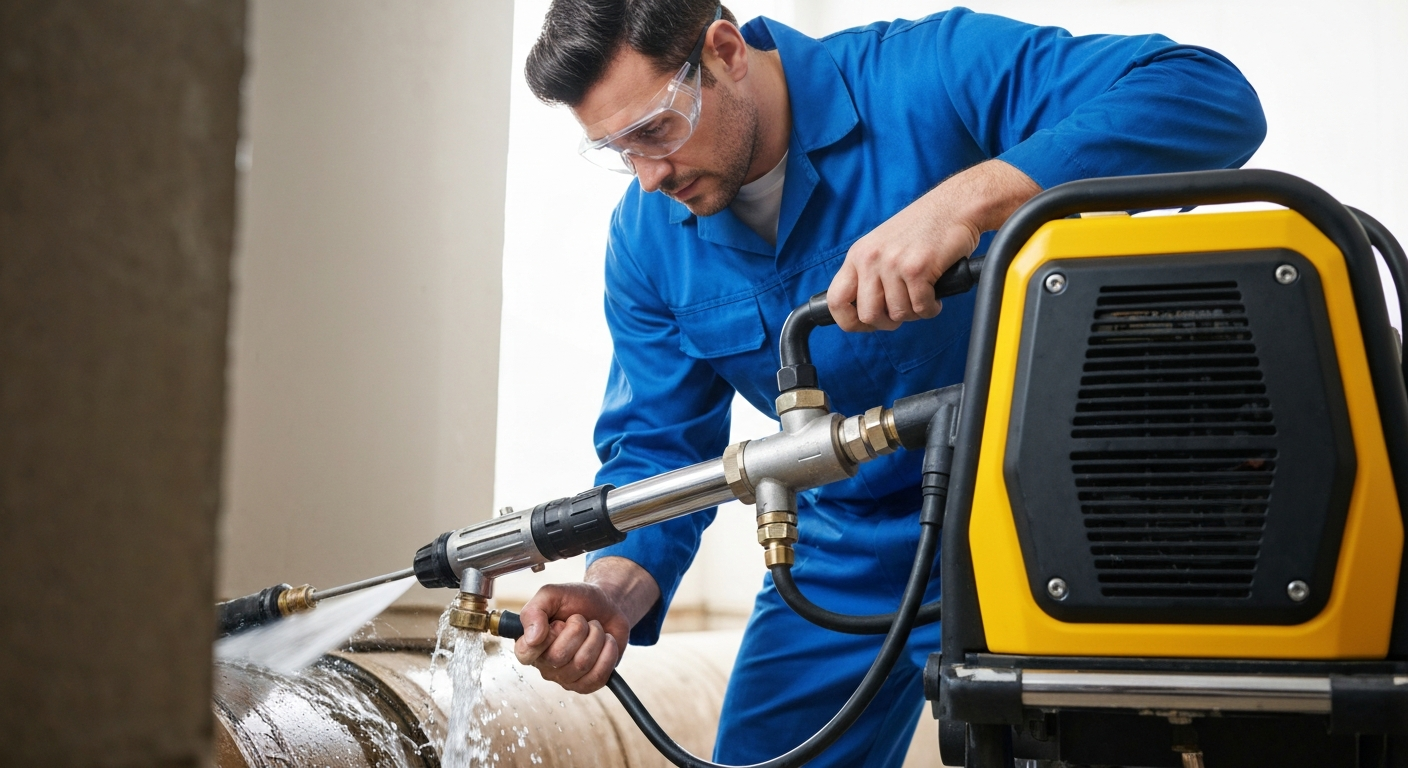
Pros insert a specialized nozzle into the drain or sewer cleanout, and nozzle design matters as much as the pump itself. Rear-facing jets, angled roughly 15 to 45 degrees, propel the hose forward while scrubbing the pipe walls in multiple directions as they go. Forward-facing jets, angled 0 to 15 degrees, concentrate the flow to punch through a complete blockage first. Spinning nozzles rotate as they move, which is particularly effective on grease and sludge since they scrub the full pipe circumference rather than a single line down the pipe. Pros select the nozzle type based on what the camera inspection shows.
Step 3 — Flushing the Line
High-pressure water — between 1,500 and 4,000 PSI depending on the pipe size and blockage type — is pushed through the full length of the line. Grease, sludge, scale, and root material are broken up and flushed downstream into the main sewer or cesspool system.
Step 4 — Verifying the Results
After jetting, pros can run a quick camera pass to confirm the line is clear and check for any underlying pipe issues that may have been hidden under the buildup. You see the results — and they tell you if anything else needs attention.
Why Suffolk County Homeowners and Businesses Call Us
Partnered with Licensed & Insured Pros
Every hydro-jetting job is performed by licensed, insured professionals. You're protected from start to finish, and the work meets New York State standards.
We Know Long Island Drainage Systems
Most of Suffolk County runs on cesspools and septic systems, not municipal sewer. Local pros understand how drain lines connect to these systems — and they make sure their work doesn't create problems downstream.
Diagnosis Before Recommendations
Pros won't run high-pressure water through a compromised pipe. And they won't recommend hydro-jetting if a standard drain cleaning will solve the problem. You get an honest assessment and a clear recommendation before any work starts.
Residential and Commercial
From single-family homes with recurring kitchen clogs to restaurants with grease trap backups and multi-unit buildings with main line issues — local pros handle hydro-jetting for all property types across all of Suffolk County.
What Hydro-Jetting Typically Costs
A full residential hydro-jetting service typically runs $450 to $1,400, with New York-area rates commonly landing around $394 to $676 for a standard job, at an hourly rate of roughly $150 to $250. Commercial-grade jetting, which uses heavier equipment for larger-diameter lines, typically runs $500 to $2,500 or more.
These are typical ranges, not a quote, and the New York figures are regional benchmarks rather than confirmed Suffolk-specific numbers. Your actual cost depends on pipe length, diameter, and what's causing the blockage.
Bay Shore, Islip
The Problem
A homeowner had called for drain cleaning twice in the same year for the same kitchen line, and the clog kept coming back within a couple of months each time — a pattern that pointed to buildup on the pipe walls rather than a one-time blockage.
The Diagnosis
A camera inspection showed heavy grease buildup coating the interior of the pipe, narrowing the usable diameter significantly even though the line technically "drained." Mechanical snaking in the prior visits had only punched a channel through the center of the buildup rather than removing it.
The Fix
The connected specialist used a hydro jetter to scour the full interior surface of the pipe with high-pressure water, cutting through the grease and buildup around the entire circumference rather than just clearing a center channel — restoring the line much closer to its original diameter.
Reducing Recurrence
Because the buildup was grease-related, the technician suggested reducing grease/fat down the kitchen drain going forward and flagged that an annual jetting maintenance visit is a common way Suffolk homeowners with older pipe keep buildup from re-accumulating between now and any future clog.
Costs vary by property, system size, and access — this range is typical for Suffolk County and is not a quote. A free estimate from your connected professional will confirm exact pricing for your property.
Hydro-Jetting Across All of Suffolk County
SuffolkDrainAndSewer.com connects you with hydro-jetting services throughout all 10 townships in Suffolk County. Whether you're dealing with a recurring kitchen drain in Bay Shore, a grease-choked line in a Patchogue restaurant, or a root-invaded sewer in Smithtown — we'll connect you with a pro serving your area.
View all service areasHydro-Jetting — Frequently Asked Questions
Not sure hydro-jetting is what you need? A sewer camera inspection can confirm what's actually in the line first. Dealing with a simpler, one-time clog? Standard drain cleaning may be all it takes. Think roots are the real problem? See our root intrusion removal page. Running a restaurant with recurring grease issues? Pair this with grease trap cleaning for a longer-lasting fix.
Ready to Clear That Line for Good? Get a Free Estimate.
No obligation. No pressure. Tell us what's been happening with the drain and we'll connect you with a pro who will let you know if hydro-jetting is the right call — or if something simpler will do the job.