Grease Trap Cleaning & Maintenance in Suffolk County, NY - Keep Your Kitchen Running
A grease trap that hasn't been cleaned on schedule doesn't give you much warning. The drain backs up. The kitchen goes down. Your health department inspection doesn't go well. Scheduled maintenance prevents all of that.
Suffolk Drain & Sewer provides professional grease trap cleaning and maintenance for restaurants, commercial kitchens, delis, cafes, and food service properties across all of Suffolk County. One-time cleaning and scheduled maintenance contracts available.
What a Grease Trap Does — And Why Cleaning It Matters
A grease trap — also called a grease interceptor — is a plumbing device installed in the drain system of a commercial kitchen. Its job is to intercept fats, oils, and grease before they enter the sewer line or cesspool. Grease doesn't mix with water — it solidifies in pipes and coats the walls of drain lines, building up over time until the line backs up. A properly functioning grease trap catches that material before it becomes a plumbing problem.
The trap works by slowing wastewater flow and allowing grease to float to the surface and solids to settle at the bottom. The separated wastewater flows out the other end. Over time, the grease layer and the solids layer accumulate and reduce the trap's working capacity. When the trap is too full to function effectively, grease starts bypassing it and entering the drain system — which is where the backup, odor, and compliance problems begin.
The industry standard for knowing when a trap needs service is called the 25% Rule: when the combined grease cap and settled solids reach roughly 25% of the trap's total liquid depth, separation efficiency drops sharply and the unit stops doing its job reliably. This isn't eyeballed, it's measured with a core sampler through the trap's sample well, which captures a cross-section showing the grease layer, solids layer, and clean water layer so the percentage can actually be calculated. Surface appearance alone isn't reliable, since it doesn't reflect how much sludge has settled at the bottom.
Many jurisdictions pair the 25% threshold with a flat maximum interval regardless of fill level, commonly a 90-day ceiling, meaning service is required at 25% fill or 90 days, whichever comes first. In practice, small indoor traps at high-volume kitchens often need service weekly to monthly since they fill fast in a small footprint, while larger in-ground interceptors can often stretch to quarterly, but only if actual measured accumulation supports it.
For properties on a commercial cesspool or septic system rather than municipal sewer, a functional grease trap is especially important. Grease that reaches a cesspool accelerates biological clogging and dramatically shortens the system's service life.
Signs Your Grease Trap Is Overdue for Cleaning
These are the operational signals that the trap needs attention before it becomes a kitchen-down situation.
Ready to schedule? Get a free estimate on grease trap service.
Schedule Grease Trap ServiceHow We Clean and Maintain Your Grease Trap
Access and Inspect
We locate and open the grease trap and take a core sample to measure the actual grease cap depth and solids depth, not just a visual check, which is the correct way to determine if service is actually needed versus just due for a scheduled visit. We assess baffle condition and the inlet and outlet connections at the same time.
Full Pump-Out
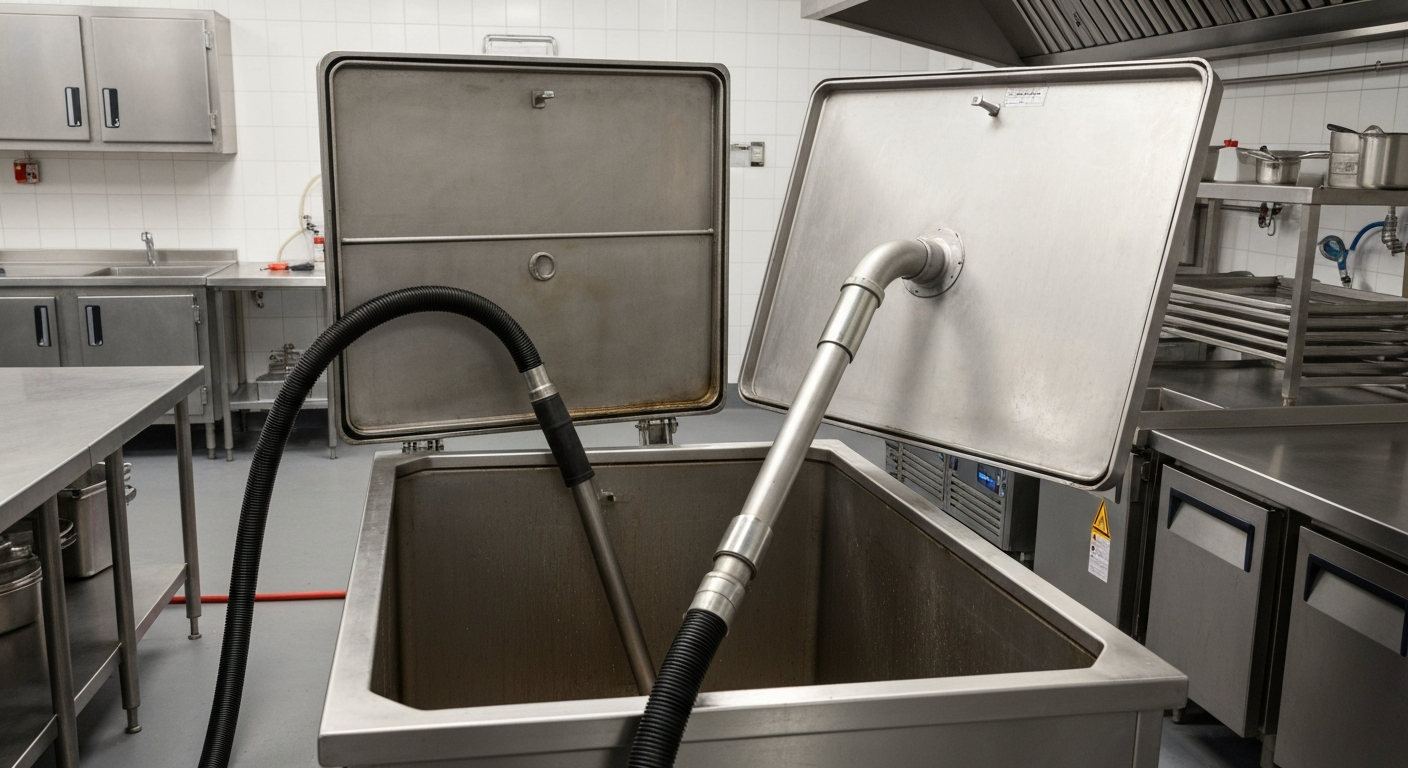
We pump out the full contents of the trap — grease layer, water column, and solids — using a vacuum truck. We don't skim. A full cleanout restores the trap's working capacity.
Clean the Trap Interior
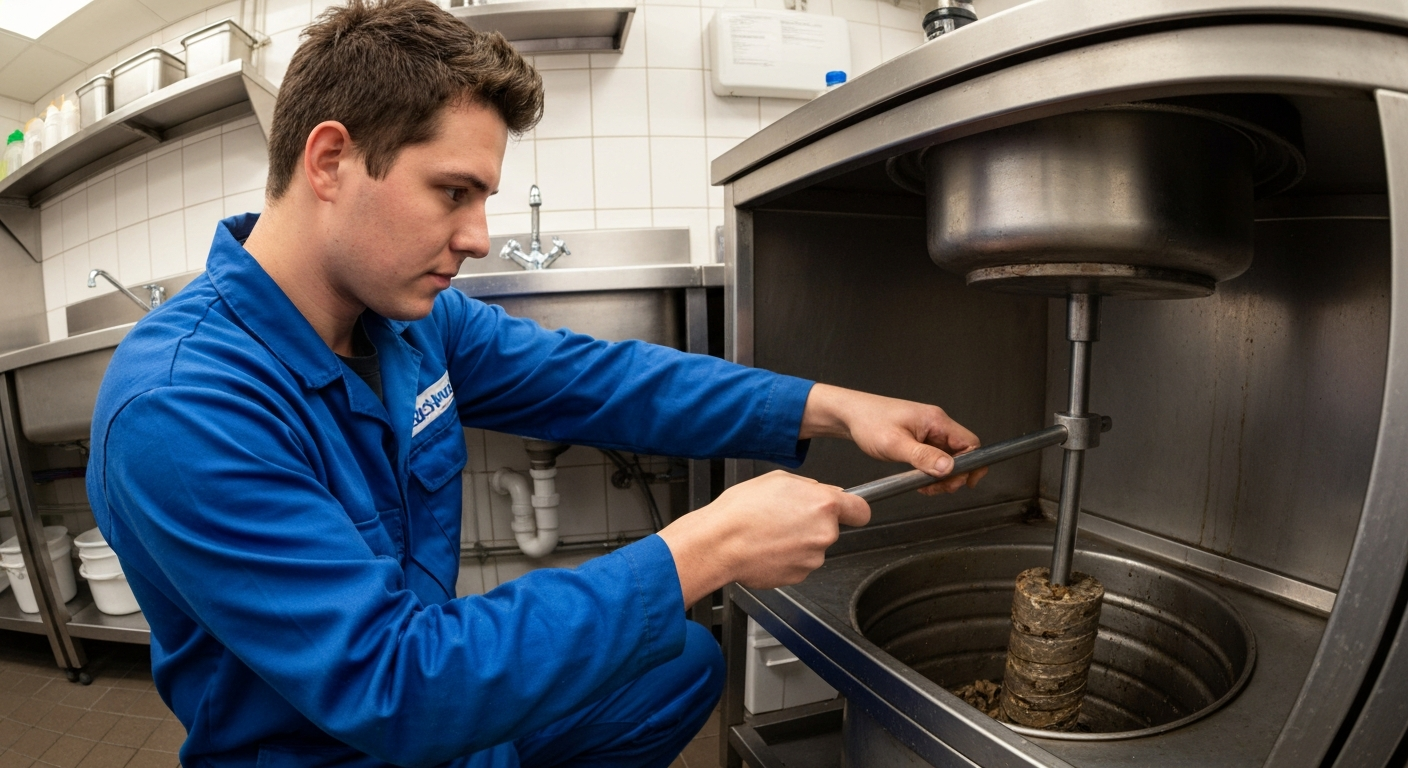
After pumping, we scrape and clean the trap walls, baffles, inlet, and outlet to remove residual grease coating. This step matters — a pump-out that doesn't clean the walls leaves a coating that accelerates refill. We also inspect baffles, gaskets, and connecting pipes during the same visit, catching a cracked baffle or failing gasket before it causes a bigger failure, not just pumping and moving on.
Inspect and Document
We inspect the baffles and structural condition of the trap and note any issues. We provide service documentation — date, volume pumped, trap condition — suitable for health department records and internal maintenance logs.
Schedule the Next Service
Based on the current accumulation rate and your operation volume, we recommend the appropriate next service interval and can set up a scheduled maintenance contract so the trap stays on schedule without you having to track it.
Why Suffolk County Food Service Operations Call Us
Licensed & Insured
Grease trap service in New York requires a licensed waste hauler, and in Suffolk County specifically, a contractor must hold the grease trap endorsement under the county Liquid Waste License, a distinct credential from general septic or cesspool pumping work. Every service is performed by licensed, insured professionals with proper waste disposal practices, and documented service records, signed manifests, are expected to be produced on request during health inspections. Non-compliance can trigger fines, corrective action orders, and in serious or repeat cases, closure orders until the issue is resolved, a real risk profile that makes documented, on-schedule service worth taking seriously.
Service Documentation for Compliance
We provide written service records suitable for health department inspections and local sewer authority compliance documentation. You're not scrambling to prove the trap was serviced when the inspector shows up.
Scheduled Maintenance Contracts
We set up recurring service contracts so the trap stays on schedule without you tracking it. Monthly, quarterly, semi-annual — we match the frequency to your operation and remind you before service is due.
Emergency Grease Trap Service
When the kitchen goes down due to a grease backup, we respond as an emergency. We understand that a kitchen that can't operate is a revenue problem, not just a plumbing inconvenience.
What Grease Trap Cleaning Typically Costs
A scheduled grease trap cleaning typically runs $325 to $950 per visit when the trap is within normal limits, meaning it's been serviced on schedule rather than neglected. A trap that's badly overdue costs meaningfully more to service, since higher grease and solids volume means more time and disposal cost, which is a real, practical reason consistent scheduled service is the lower-cost option over time, not just a compliance checkbox.
These are typical ranges, not a quote. Your actual cost depends on trap size, accumulation level, and service frequency.
Schedule Grease Trap ServiceGrease Trap Cleaning Across All of Suffolk County
We provide grease trap cleaning and maintenance throughout all of Suffolk County — from restaurant corridors in Bay Shore, Patchogue, and Huntington Station, to commercial kitchens in Riverhead and out to the Hamptons where food service operations run year-round or seasonally. Wherever your property is in Suffolk County, we service grease traps of all sizes.
View all service areas →Patchogue, Brookhaven (commercial — restaurant)
The Problem
A full-service restaurant's grease interceptor was due for its quarterly service, and the owner also wanted documentation ready ahead of an upcoming health department inspection.
The Diagnosis
The connected technician used a core sampler through the trap's sample well to measure the grease cap and settled solids layers — the correct compliance method, since visual inspection alone doesn't reflect what's accumulated at the bottom. The combined FOG and solids had reached close to the 25% threshold that triggers required service.
The Fix
The trap was pumped and vacuumed clean — FOG, solids, and wastewater all removed, not just skimmed. Interior baffles, walls, and the outlet were manually scraped clean of residual buildup, and the technician inspected the baffles, gaskets, and connecting pipes for wear, catching a minor gasket issue before it became a bigger problem.
Reducing Recurrence
Because the trap was tracking toward the 25% threshold right at the quarterly interval, the technician confirmed the current schedule was appropriate for this kitchen's volume — and provided a dated service manifest for the restaurant's records, since documented service history is expected during health department inspections.
Costs vary by trap size (HGI vs. GGI) and accumulation level. Smaller indoor units at high-volume kitchens may need monthly service; larger in-ground interceptors often stretch to quarterly. This range is typical for Suffolk County and is not a quote. A free estimate from your connected professional will confirm exact pricing.
Grease Trap Service — Frequently Asked Questions
Ready to Schedule Grease Trap Service? Get a Free Estimate.
One-time cleaning or recurring maintenance contract — tell us about your operation and we'll set up the right service schedule. No obligation, no pressure.
Related Services: Commercial Drain Jetting | Commercial Cesspool Service | Hydro Jetting | Drain Cleaning