I/A OWTS Installation & Maintenance in Suffolk County, NY - Meet Code, Protect the Water
Need help understanding Suffolk County's septic upgrade requirements — or figuring out if you qualify for grant assistance? You're not alone. The process is confusing. We can walk you through it.
Suffolk Drain & Sewer helps homeowners across Suffolk County understand, plan, and complete I/A OWTS installations — the nitrogen-reducing septic systems now required for new construction and major renovations in New York State. We handle installation, ongoing maintenance, and can help you navigate the Suffolk County SIP grant program.
What Is an I/A OWTS — In Plain English
I/A OWTS stands for Innovative Alternative Onsite Wastewater Treatment System. That's the official name for the nitrogen-reducing septic systems that Suffolk County and New York State now require for new construction and major renovation projects. The plain-English version: it's an advanced septic system that treats wastewater to significantly lower nitrogen levels before it reaches the groundwater.
Here's why that matters on Long Island. Most of Suffolk County is unsewered. Homes rely on cesspools and older septic systems to handle wastewater — and those systems discharge nitrogen into the groundwater. That nitrogen flows into Long Island's bays, estuaries, and waterways, contributing to algae blooms, dead zones, and the decline of shellfish habitat. Nitrogen pollution from residential wastewater systems is one of the most significant documented environmental threats to Long Island's coastal waters.
I/A OWTS systems address this by adding a treatment step before the effluent reaches the soil. Different systems use different technologies — aerobic treatment, biofilters, and other processes — but the goal is the same: reduce nitrogen output by 70% or more compared to a conventional cesspool or standard septic tank. Systems approved by the Suffolk County Department of Health Services include brands such as Fuji Clean, Norweco, Orenco AdvanTex, and Hydro-Action, among others.
Since July 1, 2021, I/A OWTS installation has been required for all new construction and major renovations in Suffolk County. For existing homes, installation is voluntary — but the Suffolk County Septic Improvement Program (SIP) provides financial incentives to encourage upgrades, and some municipalities have additional requirements in nitrogen-sensitive areas near coastal waterways.
Not the Same as a Municipal Sewer Hookup
If you're looking to connect your home to a municipal sewer line, that's a different process entirely, typically handled through your town's sewer district, not through I/A OWTS installation. I/A OWTS is specifically for properties that remain on a private wastewater system, cesspool or septic, and need to meet Suffolk County's nitrogen-reduction requirements. If you're not sure which situation applies to you, we can help you figure that out.
Do You Need an I/A OWTS — Or Does It Just Make Sense for You?
There are situations where an I/A OWTS is required, and situations where it's a financially smart voluntary upgrade. Here's how to tell the difference.
Not sure which category you're in? That's the most common situation. We help homeowners figure out what they actually need — and whether the SIP grant makes the voluntary upgrade worth doing now versus waiting for a failure event.
Not sure if you need an upgrade — or just want to understand your options?
Talk Through Your Options — FreeWhat the I/A OWTS Installation Process Actually Looks Like
Site Assessment and System Selection
Every property is different — lot size, soil type, groundwater depth, existing system location, and household size all affect which I/A OWTS system is appropriate and how it will be configured. We assess the property and help you understand the system options that are realistic for your specific site.
Engineering and Permitting
I/A OWTS installation requires engineering design and permitting through the Suffolk County Department of Health Services. This step includes a licensed engineer preparing the system design, submitting it for SCDHS approval, and coordinating any town-level permits required. This is not a quick step — the permitting process takes time, which is why starting early matters.
Old System Abandonment
Before the new system is installed, the existing cesspool must be properly abandoned — pumped out, filled, and documented to SCDHS standards. Cesspool abandonment is part of the installation project scope.
Installation
The approved I/A OWTS system is installed per the engineered design. Most I/A OWTS systems require electrical connections — the treatment process uses power to run aerators, pumps, or dosing timers. The installation includes connecting the system to the home's electrical supply.
Ongoing Maintenance Contract
Suffolk County requires that I/A OWTS systems be maintained under a service agreement with a licensed service provider. The maintenance contract covers annual inspections, system checks, effluent sampling, and any adjustments needed to keep the system performing within nitrogen reduction standards. This is an ongoing annual cost — typically several hundred dollars per year — that homeowners need to budget for after installation.
I/A OWTS Maintenance — What You're Committing To Long-Term
This is the part of the I/A OWTS conversation that homeowners on Reddit and local community groups ask about most often — and for good reason. An I/A OWTS system is not a set-and-forget installation. It has ongoing requirements that a conventional cesspool or standard septic tank does not.
I/A OWTS systems are electrically powered. They run constantly, which means they add a modest amount to your electricity bill. The actual cost depends on the system type, but most homeowners report an increase in the range of $10 to $30 per month. If power goes out, the system stops treating — which is generally not an immediate problem for short outages but is something to be aware of for extended outages.
The required annual service agreement covers the system inspection, effluent sampling, mechanical checks, and any tuning adjustments. Service agreements typically run $300 to $600 per year depending on the provider and system type. This is a Suffolk County requirement — not optional — and the service records need to be maintained and available for SCDHS review.
The full picture is important. An I/A OWTS system, properly maintained, is a significant upgrade from a failing cesspool. It protects the groundwater, meets current code, and avoids the disruption of emergency replacement. The SIP grant reduces the installation cost meaningfully. But understanding the full ongoing commitment — electricity, annual maintenance contract, occasional repairs — before you commit is the right way to approach the decision.
Why Suffolk County Homeowners Work With Us on I/A OWTS
Licensed & Insured
I/A OWTS installation and maintenance work in Suffolk County requires licensure. We hold the required credentials and work to SCDHS standards on every project.
Plain Language Guidance
The I/A OWTS and SIP grant process involves government agencies, engineering firms, permit timelines, and system options that feel overwhelming when you start. We explain the process in plain language, tell you what applies to your specific property, and help you understand your options before you commit to anything.
Installation and Long-Term Maintenance
We handle both ends of the relationship — installation coordination and the ongoing annual maintenance contract your system requires. That means you're working with people who know your specific system, know its history, and can spot issues before they become problems.
Honest About the Full Cost Picture
We don't sell I/A OWTS installations by emphasizing only the grant and ignoring the ongoing costs. We walk through the full picture — installation cost, grant offset, annual maintenance, electricity — so you can make a fully informed decision.
Westhampton Beach, Southampton
The Problem
A homeowner needed to replace an aging cesspool with a nitrogen-reducing I/A OWTS system, required for their planned home addition under current Suffolk County code.
The Diagnosis
An engineer evaluated the site's soil conditions, setback distances from wells and property lines, and household capacity needs to size the new system and select an approved I/A technology suited to the property — with East End properties like this one typically requiring closer attention to environmental sensitivity standards than western Suffolk installs.
The Fix
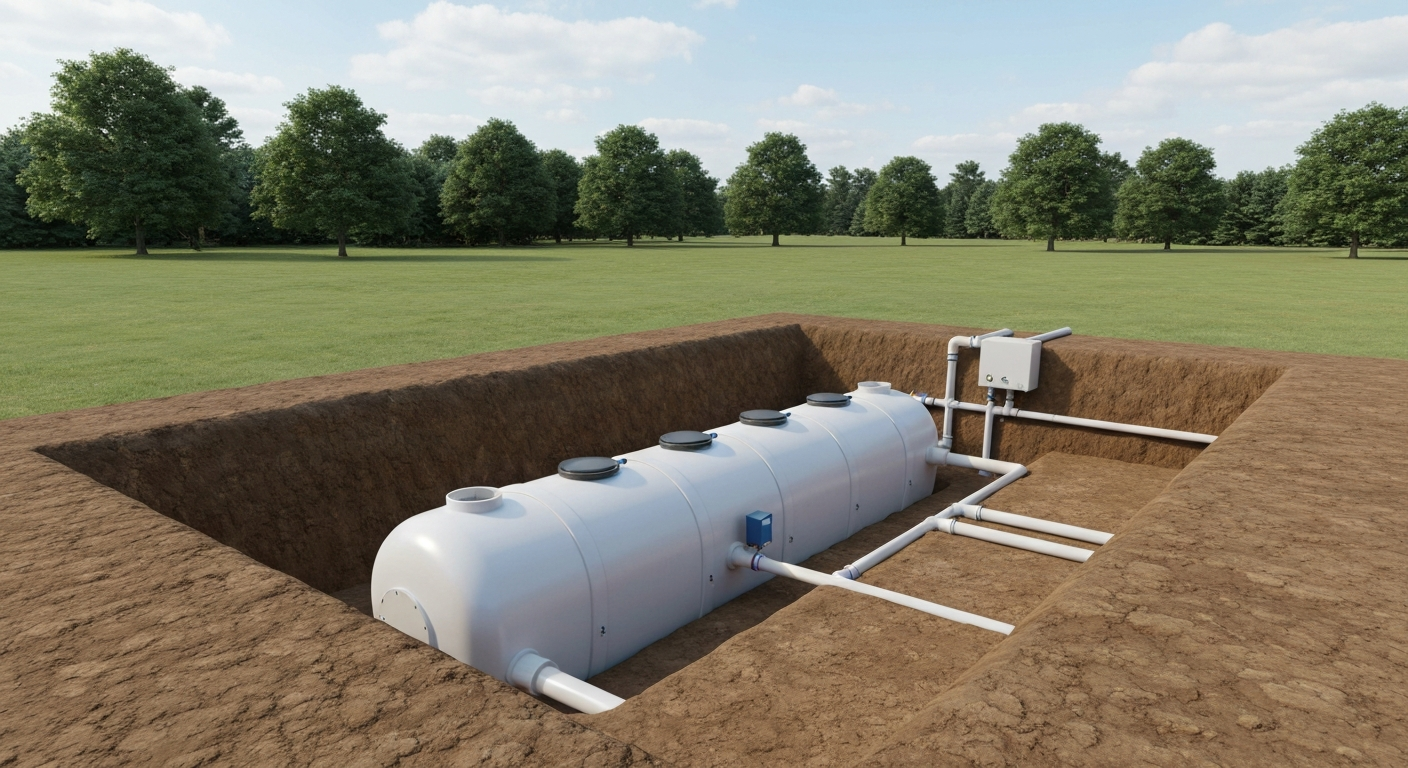
The connected installer precision-excavated to avoid utility lines, set the precast tank with engineered baffles, connected the distribution box, and bedded the leaching/absorption piping in gravel at the required pitch for proper gravity flow — replacing the old block cesspool with a modern, code-compliant system.
Reducing Recurrence
Because I/A systems require an ongoing maintenance contract by design (unlike a passive cesspool), the technician set the homeowner up with scheduled service visits to keep the system's treatment components functioning as intended long-term.
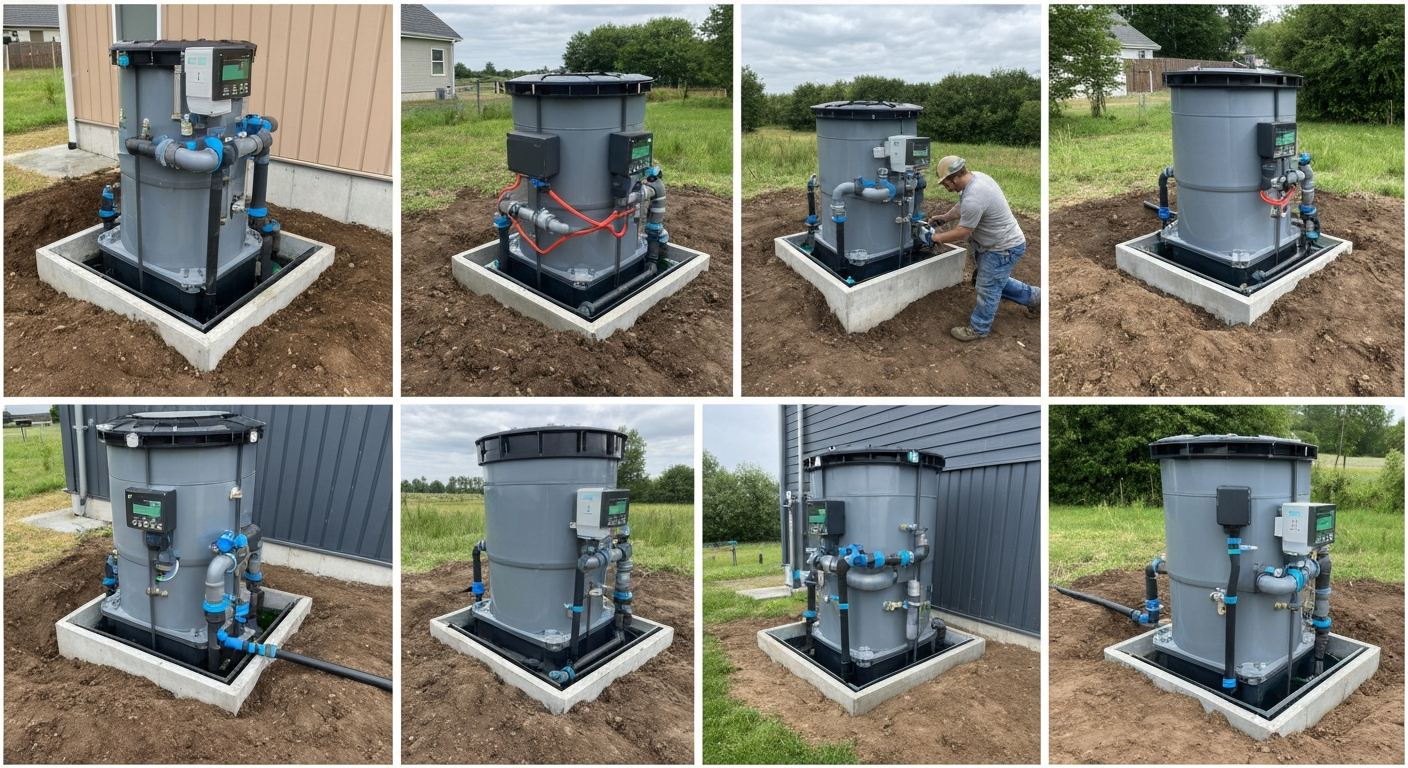
I/A OWTS installed cost ranges $15,000–$40,000 depending on system type, site conditions, and region, with East End properties trending toward the higher end. This range is typical for Suffolk County and is not a quote. A free estimate from your connected professional, combined with SIP grant guidance, will confirm your actual net cost.
I/A OWTS Installation & Maintenance Across Suffolk County
We work with homeowners throughout all of Suffolk County on I/A OWTS projects. The East End townships — Southampton, East Hampton, and Southold — have seen some of the highest adoption rates due to proximity to coastal waterways and nitrogen-sensitive areas. But I/A OWTS is relevant across the entire county as older cesspools age out and SIP grant funding makes voluntary upgrades more accessible.
View all service areasI/A OWTS Installation — Frequently Asked Questions
Ready to Understand Your Options? Start With a Free Consultation.
Whether you're required to install an I/A OWTS or thinking about a voluntary upgrade, the first step is understanding what applies to your property and what the real costs and process look like. We'll give you a straight picture — no pressure, no commitment required.
Licensed & Insured · SIP Grant Guidance · Serving All of Suffolk County
Want help specifically with the grant paperwork? See our SIP Grant Guidance page. Your existing cesspool or septic tank needs to be properly closed out as part of this process. Not sure what condition your current system is in? A septic system inspection is a good starting point.